



News Archives - ProFood Machines

September 21, 2026News

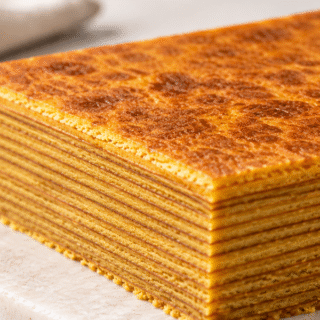
Lapis legit production comes with different challenges compared to many other types of cakes. The baking process is carried out gradually, layer by layer, which requires a high level of precision from the beginning until the product is fully completed. On a small scale, this process is still relatively easy to control because production volume […]

September 21, 2026News

Lapis legit, also known as Indonesian layer cake, is a bakery product with a unique production process. Unlike conventional cakes, where the batter can be poured into a pan and baked all at once, lapis legit is made by building the cake layer by layer. Each layer needs to have a relatively uniform thickness, be […]

January 28, 2026Uncategorized

Starting a home-based food business, especially in the cookie and dry pastry segment, is a smart move in today’s market. Consumption trends for snacks and traditional Indonesian cookies continue to rise, both for daily needs and special occasions such as Eid, Christmas, or wedding celebrations. However, many home-based entrepreneurs face challenges in increasing production capacity […]

January 28, 2026Uncategorized

In recent years, the culinary business trend in Indonesia has continued to grow rapidly. One product that has been gaining strong popularity is trendy cookies. These crunchy and sweet treats are not only loved by children but have also become a favorite snack among young people and adults alike. The continuously increasing demand opens up […]

November 26, 2025Uncategorized

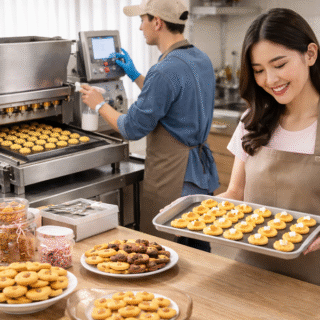
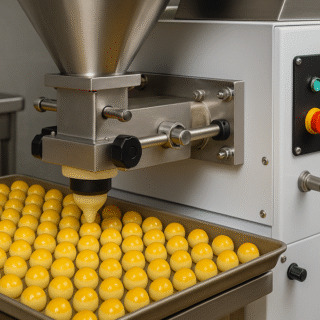
In the ever-evolving culinary world, speed, consistency, and efficiency have become the key drivers of success. For pastry businesses, especially those producing pineapple tarts (nastar), the biggest challenge is not only creating delicious products but also maintaining quality at high production volumes. With rising market demand, modern nastar machines have become a smart solution that […]

September 21, 2026
Cara-Meningkatkan-Efisiensi-Produksi-Lapis-Legit-Tanpa-Mengorbankan-Kualitas.png

Lapis legit production comes with different challenges compared to many other types of cakes. The baking process is carried out gradually, layer by layer, which requires a high level of precision from the beginning until the product is fully completed.

On a small scale, this process is still relatively easy to control because production volume is limited. However, as demand increases, manufacturers begin to face new challenges. Production time becomes longer, operator workloads increase, product consistency becomes more difficult to maintain, and small errors may occur more frequently.

Under these conditions, improving efficiency is not simply about making production faster. Manufacturers must also ensure that quality, flavor, texture, layer thickness, and the final appearance remain consistent with established standards.

For this reason, increasing production capacity should be approached through comprehensive improvements to the entire production system, including recipe standardization, workflow management, parameter recording, quality control, and the use of technology when necessary.

Why Is It Difficult to Scale Up Lapis Legit Production?

Lapis legit is not made by pouring the entire batter into a baking pan and waiting for it to bake completely. Each layer requires its own individual process.

Operators must pour approximately the same amount of batter, spread it evenly, bake the layer, and then repeat the process many times until the desired number of layers has been achieved.

The more layers that need to be produced, the more repetitive steps are involved. In a manual production environment, the final result is highly dependent on operator consistency.

When order volumes are still relatively low, this process may not create significant problems. However, when production volume doubles or triples, the workload can also increase substantially.

Operator fatigue can result in inconsistent amounts of batter being used for each layer, uneven baking times, or less consistent spreading. If these conditions continue, differences between production batches may begin to appear.

For this reason, increasing capacity should not simply involve adding more workers. Manufacturers need to evaluate the entire production process and ensure that every stage has clearly defined standards.

Recipe Standardization Is the Main Foundation

Production efficiency begins with a recipe that can be consistently repeated.

In home-scale production, measurements based on experience or estimation may still be commonly used. However, in commercial production, every ingredient should have a clear and documented measurement.

The weight of eggs, sugar, flour, butter, milk, spices, and other ingredients should be standardized according to specific measurements.

In addition to ingredient quantities, the mixing process should also be documented. The order in which ingredients are added, mixer speed, mixing duration, and even the resting time before the batter is used can all affect the final product.

The purpose of standardization is not to eliminate the unique character of a recipe, but to establish a reliable reference point.

When a batch produces a different result, the production team can compare the actual process with the established standard. This makes evaluation much easier than when the entire production process depends solely on an operator’s habits or experience.

A documented recipe also makes it easier to train new employees. Operators do not have to learn only through observation or estimation because the company already has clear guidelines that can be followed.

Batter Consistency Has a Major Impact on Layer Quality

The characteristics of the batter play an important role in the formation of each layer.

Batter that is too runny will spread differently compared to thicker batter. Changes in ingredient temperature, mixing duration, or storage time can also affect batter consistency.

During production that lasts for several hours, manufacturers need to ensure that the batter used at the beginning and at the end of the process maintains relatively similar characteristics.

If the consistency changes too much, the thickness and texture of the layers may also change.

For this reason, ingredient temperature, mixing time, production-room conditions, and the amount of time the batter is held before use should all be controlled.

In certain situations, preparing several smaller batches of batter may be more effective than mixing the entire production requirement at once.

This approach can help maintain batter quality while making the production process easier to control.

Layer Thickness Should Be Measurable

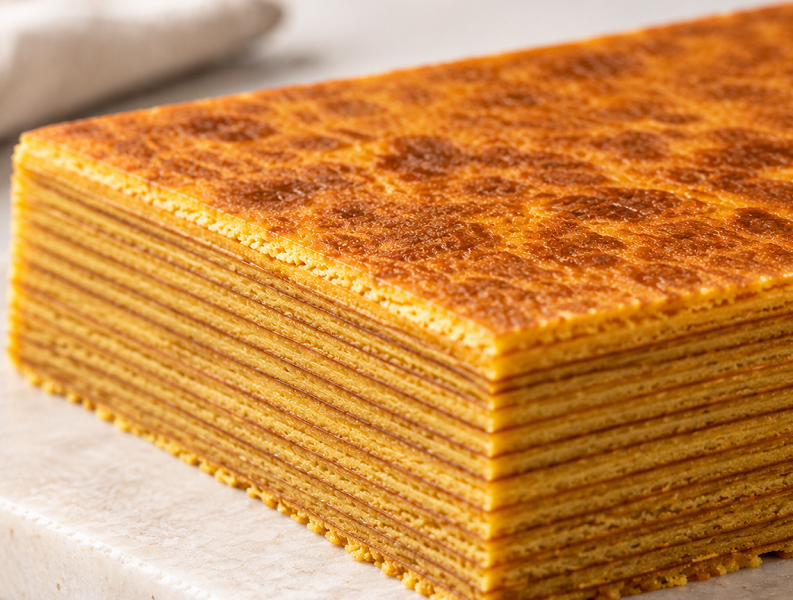
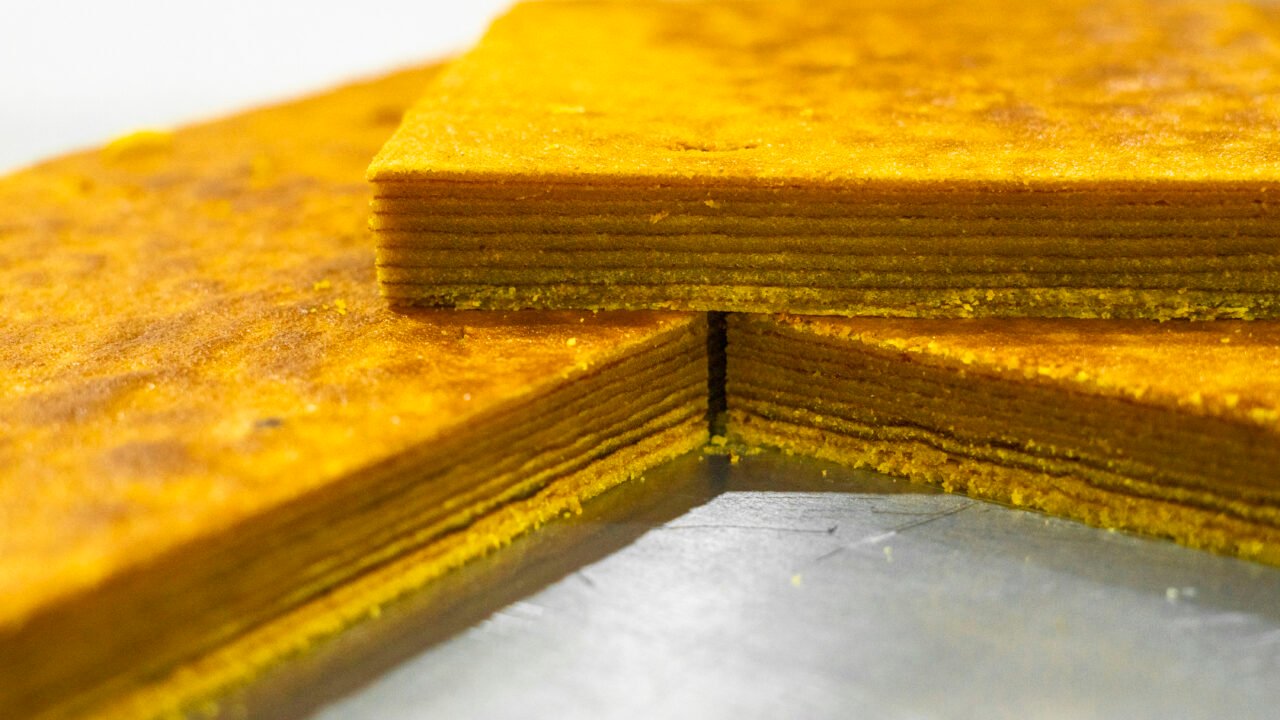
One of the most recognizable visual characteristics of lapis legit is its neat and uniform layers.

Uneven layer thickness can make sliced cakes appear inconsistent, particularly for products positioned in the premium market.

In manual production, one of the simplest ways to reduce variation is to determine the exact amount of batter used for each layer.

Operators can use a specific weight or volume measurement so that every layer follows the same reference.

This method may seem simple, but it can have a significant impact.

When the amount of batter is controlled more precisely, spreading becomes easier and the thickness of each layer can become more consistent.

As production volume grows, controlling layer thickness may also become one of the reasons manufacturers begin considering the use of technology.

A more controlled system can reduce dependence on visual estimation and make repetitive processes easier to manage consistently.

Baking Time Should Also Be Standardized

In addition to the amount of batter used, the baking time for each layer also requires careful attention.

Each layer must reach the proper level of doneness before the next layer is added.

If the baking time is too short, the surface may not be sufficiently stable. If it is too long, the color and texture may change.

Using a timer is a simple step that can improve consistency in manual production.

Operators do not have to rely entirely on memory or estimation to determine baking time.

Manufacturers should also record the baking-time range that produces the best results for each product.

However, these figures should be treated as production parameters rather than absolute rules.

Oven conditions, baking-pan size, batter thickness, room temperature, and formulation can all affect the final result.

For this reason, production trials are still necessary before a particular parameter is established as part of the standard operating procedure.

A Good Workflow Can Save a Significant Amount of Time

Improving efficiency does not always have to begin with purchasing new machinery.

In many cases, improving the production layout and workflow can already result in meaningful efficiency gains.

Observe how operators move throughout the production process.

If raw materials are located too far from the mixing area, baking pans need to be moved repeatedly, or operators frequently have to wait for equipment being used by another department, valuable production time may be wasted without being noticed.

Small inefficient movements may only take a few seconds at a time.

However, if they are repeated dozens or hundreds of times each day, the total amount of wasted time can become significant.

Ideally, the production area should follow the natural sequence of the manufacturing process, starting from ingredient preparation, mixing, layer formation, baking, cooling, cutting, and finally packaging.

Frequently used equipment should also be positioned within easy reach.

With this type of workflow, operators can work more efficiently without having to increase their physical workload excessively.

Separate Skill-Based Processes from Repetitive Tasks

Not every stage of production requires the same level of skill.

Some processes require experience, such as evaluating batter characteristics, determining the correct level of doneness, or performing quality control.

Other activities, however, are repetitive and can be made more systematic.

Manufacturers should identify the difference between these types of work.

Highly experienced employees should ideally focus on tasks that require judgment and decision-making, while repetitive processes can be simplified through standard operating procedures, tools, or automation.

This approach does not reduce the importance of workers.

On the contrary, it allows operator skills to be used where human expertise is truly needed instead of being consumed by repetitive tasks.

In the long term, separating these processes can also make it easier for a business to scale up production.

Quality Control Remains an Essential Part of Production

Faster production provides little benefit if the number of products that fail to meet quality standards also increases.

For this reason, quality control must be implemented alongside any increase in production capacity.

Manufacturers can determine several key parameters that should be monitored, such as layer uniformity, surface color, product weight, dimensions, texture, flavor, and aroma.

When production capacity becomes large, not every product necessarily needs to undergo a complete inspection.

A sampling system can be used as long as the company has clearly defined standards.

The most important requirement is having a clear definition of which products meet specifications and which products require further evaluation.

Quality-control data can also provide valuable information about whether a production change has actually improved efficiency or created new problems.

Production Data Helps Identify Problems That Are Not Immediately Visible

Many businesses only record the number of products manufactured and the number of products sold.

However, operational data can help identify areas of production that are still inefficient.

Manufacturers can begin by recording the number of batches produced per day, production duration, rejected products, causes of defects, raw-material usage, downtime, and the number of employees involved.

From this relatively simple data, companies can identify patterns.

For example, they may discover that production time increases during certain hours, rejected products occur more frequently during particular shifts, or one specific stage consistently creates a queue in the production process.

This type of information is extremely useful before a company decides to hire additional employees or invest in new equipment.

Identify Bottlenecks Before Increasing Capacity

A bottleneck is the part of a process that limits the overall production capacity.

In lapis legit production, bottlenecks may occur during batter mixing, layer formation, baking, cooling, or even packaging.

For example, if a mixer can prepare batter very quickly but the layer-forming process takes a long time, purchasing a larger mixer will not significantly increase total output.

Instead, the batter will simply spend more time waiting before it can be processed.

The same applies if the baking process is the main constraint.

Accelerating earlier production stages will only create a larger queue in front of the oven.

For this reason, capacity expansion should always begin with identifying the stage that most strongly limits total output.

New investments can then be directed toward solving that specific constraint.

When Is Automation Necessary?

There is no single production volume that can be used as a universal benchmark for every business.

The need for automation depends on current production capacity, labor costs, growth targets, available production space, and the desired level of consistency.

One easily recognizable sign is when the number of employees continues to increase but production output does not increase proportionally.

Another sign occurs when product quality becomes overly dependent on which operator is working at a particular time.

Under these conditions, the use of an automatic lapis legit machine may be considered as one way to make repetitive production processes more measurable and consistent.

The goal is not to replace the entire role of human workers, but to help companies build production processes that are easier to control, replicate, and scale.

For more information about how these machines work, their benefits, important specifications, and factors to consider before selecting equipment for layered cake production, you can read the article “Automatic Lapis Legit Machine: A Solution for Faster, More Precise, and Consistent Production.”

With this internal link, readers who want to learn more about the technical aspects of automation can continue to a more specialized discussion without making this article overly focused on machinery.

Calculate Your Requirements Before Investing in Machinery

Before purchasing production equipment, manufacturers should understand their current capacity and future production targets.

Start by calculating how many products can be produced in one day, how many workers are involved, and how much time is required to complete a single batch.

Next, compare those figures with market demand.

For example, if a bakery can produce 50 pans per day while consistent demand reaches 80 pans per day, there is a production-capacity gap that needs to be addressed.

The company can then compare several possible solutions, such as hiring additional workers, extending production hours, increasing oven capacity, or using equipment to support repetitive processes.

The best decision does not always involve choosing the machine with the largest capacity.

The right equipment is the one that addresses the actual bottleneck while still providing reasonable room for future growth.

Automation Still Requires Competent Operators

The use of machinery does not make operators less important.

Automated systems still require people who understand the characteristics of the product, how to operate the equipment, safety procedures, cleaning requirements, and what actions should be taken when the process does not run according to standard.

The main difference lies in how the work is structured.

In a manual production process, operators may spend most of their time performing the same movements repeatedly.

With automation, some of these activities can be carried out according to predefined parameters, allowing employees to focus more on preparation, supervision, quality control, and production-flow management.

The end result is a more effective use of human resources rather than simply reducing manual work.

Maintaining Product Character as Production Increases

One of the biggest concerns when scaling up a business is the possibility of losing the distinctive character of the product.

This can generally be avoided as long as the company understands the key factors that determine product quality.

Ingredient formulation, mixing procedures, layer thickness, temperature, baking time, and cooling processes should all be established as standards.

Technology can then be used to help execute those standards more consistently.

With this approach, increasing production capacity does not have to mean changing the identity of the product.

Instead, a more structured production system can help maintain the same characteristics even as order volumes continue to grow.

Do Not Increase Capacity Faster Than Necessary

Investment in production equipment should follow actual business needs.

A machine with a capacity far beyond current requirements may result in an investment that is not fully utilized.

In addition to the purchase price, companies must also consider production-space requirements, electricity or gas consumption, maintenance, and operator requirements.

On the other hand, choosing equipment with insufficient capacity may force the company to invest again in the near future if demand continues to grow.

For this reason, manufacturers should review historical sales data and prepare realistic growth projections.

With this approach, investment decisions can become more rational and better aligned with operational needs.

Efficiency and Consistency Must Work Together

The goal of improving production processes is not simply to manufacture more products in less time.

Manufacturers must ensure that increased capacity is accompanied by consistent quality.

For lapis legit, consumers evaluate more than just flavor.

The appearance of the layers, size, texture, color, and overall presentation also influence the perception of product quality.

For this reason, production improvements should be implemented gradually.

The process can begin with recipe standardization, batter control, time recording, workflow improvements, quality control, and eventually the use of technology when manual processes begin to limit business growth.

Ultimately, the best production efficiency does not always come from a single machine or one major change.

Better results are usually achieved when recipes, operators, standard operating procedures, production layouts, production data, and technology work together as one integrated system.

Also check: https://profoodmachines.com/automatic-lapis-legit-machine-faster-precise-consistent-production-solution/

September 21, 2026
LC178_8-1280x720.jpg

Lapis legit, also known as Indonesian layer cake, is a bakery product with a unique production process. Unlike conventional cakes, where the batter can be poured into a pan and baked all at once, lapis legit is made by building the cake layer by layer. Each layer needs to have a relatively uniform thickness, be baked for the appropriate amount of time, and then be followed by the next layer until the desired number of layers is achieved.

This process is one of the reasons why producing lapis legit in large quantities requires a high level of precision, time, and labor. With a manual method, operators must repeatedly pour the batter, level the surface, bake each layer, and continue the same process consistently until the cake is complete.

When production volumes are still relatively small, manual production may work effectively. However, as demand increases, maintaining product consistency from one batch to another becomes increasingly challenging. Small differences in the amount of batter, baking time, or operator technique can affect the final result.

For bakery businesses looking to increase production capacity without sacrificing consistency, using a lapis legit machine can be one solution. Automation helps transform a process that previously relied heavily on manual skills into one that is more measurable, easier to control, and simpler to standardize.

Why Does Lapis Legit Production Require a High Level of Precision?

One of the defining characteristics of lapis legit is its neat arrangement of thin layers, which is clearly visible when the cake is sliced. To achieve this appearance, each layer needs to have a relatively uniform thickness.

In manual production, consistency depends heavily on the operator’s experience and attention to detail. The amount of batter poured, the way the surface is leveled, and the baking time must be repeated according to the same standard. As production volume increases or operators become fatigued, the possibility of variations between products also increases.

Uneven layer thickness can affect the appearance of the finished product. Differences in baking time can also cause variations in the color and doneness of each layer. When production involves several operators, each person may even have a different working technique.

For this reason, when a business begins transitioning from home-based production to a larger scale, standardization becomes increasingly important. A measurable and controlled process can help a company maintain product quality while making it easier to increase production capacity.

What Is a Machine for Lapis Legit Production?

A lapis legit production machine is a type of food-processing equipment designed to help produce layered cakes in a more controlled and efficient manner.

In more modern systems, several production parameters can be adjusted through a control panel. Operators can set the layer thickness, number of layers, and baking time according to product requirements and the capabilities of the machine.

The benefits of automation are not limited to production speed. One of its most important advantages is the ability to repeat the same process using more consistent parameters.

Once the batter formula, machine settings, and operating procedures have been properly established, manufacturers can more easily maintain product characteristics from one batch to another.

This is particularly important for bakery businesses that want to build customer trust. Consumers naturally expect a product purchased today to have a relatively similar appearance, taste, texture, and size when they purchase it again in the future.

Advantages of Automation Compared with Manual Production

The main difference between manual production and an automated system lies in the level of control over the production process.

With a manual method, many decisions depend on the operator’s experience. The amount of batter used for each layer is often determined by habit or estimation, while the timing of the next stage may depend on visual observation.

With a machine that offers measurable settings, several of these parameters can be controlled more consistently. One example is layer thickness. If a layer is too thick, the characteristics of the product may change and the sliced appearance may become less uniform. On the other hand, layers that are too thin can also make the production process more difficult.

Automation also helps companies establish clearer Standard Operating Procedures (SOPs). Standards can be defined based on layer thickness, number of layers, baking duration, product size, and the formula being used. Once the process is properly documented, training new operators also becomes easier.

Another advantage is reduced dependence on individual skills. Workers still play an important role in preparation, machine operation, supervision, and quality control. However, production results are no longer determined entirely by the abilities of a particular operator.

At higher production volumes, a more structured production system can also help reduce bottlenecks. Adding more workers is not always the most effective solution because businesses must also consider operating costs, workspace requirements, training, and product consistency.

When Does a Business Need to Start Considering Automation?

Not every producer needs to invest in an automatic machine immediately. Each business has different requirements, so the decision should be based on production capacity, growth targets, and the challenges currently being faced.

One of the most common signs is when manual production can no longer keep up with the number of orders. Increased demand is a positive development, but a business may lose sales opportunities if its production capacity cannot keep pace with that growth.

Another sign is when product consistency becomes increasingly difficult to maintain. If layer thickness, color, or product appearance varies depending on who is producing it, the production system may need to be evaluated.

Automation also becomes increasingly relevant when products begin to be distributed through resellers, souvenir shops, bakery chains, supermarkets, hotels, hamper companies, or to multiple regions. The wider the market coverage, the more important it becomes for a company to maintain consistent quality standards.

In addition, investment in production equipment can be considered when a company wants to improve long-term efficiency. At an appropriate production volume, machinery can help increase output while optimizing the use of labor.

Factors to Consider When Choosing a Machine

Purchasing production equipment should not be based solely on price. A machine is a long-term asset, so its specifications, ease of operation, and technical support should all be carefully considered.

Several important factors to review include:

  • production capacity and tray size;
  • layer thickness range;
  • adjustable number of layers;
  • baking time flexibility;
  • control system;
  • electricity or gas requirements;
  • availability of technical support and spare parts.

Tray size should be matched to the dimensions of the products being produced. If a business offers several product variations, flexibility in adjusting layer thickness and the number of layers can also be an important consideration.

An easy-to-use control system can help operators run the production process more efficiently. A machine equipped with a PLC and touch screen, for example, allows production parameters to be configured through a more structured control panel.

In addition to specifications, after-sales service should not be overlooked. Installation, operator training, maintenance, and access to technical support when problems occur can directly affect the smooth operation of the production process.

It Is Not Just About Production Speed

One common misconception about automated machinery is that its main benefit is simply making production faster. In reality, another equally important advantage is repeatability—the ability to repeat a process using the same settings.

In the food industry, repeatability has significant value. Imagine a bakery producing layered cakes with several operators. Without clear standards, each person may use a different method when pouring and leveling the batter.

The final product may still taste good, but its appearance may not be consistent. These differences can become increasingly noticeable as production volume grows.

With a more controlled system, companies can establish production parameters more clearly. Operators continue to play an important role in supervising the process and ensuring product quality, while the machine helps perform repetitive production stages according to predetermined settings.

This approach allows a business to move from a process that relies heavily on individual skills toward a system that is easier to replicate.

Will Using a Machine Change the Recipe?

Using automated equipment does not mean that manufacturers need to change or eliminate the characteristics of a recipe that has become part of their product identity.

Taste and texture are still greatly influenced by the formula, quality of ingredients, mixing techniques, baking parameters, and quality-control standards. Butter, eggs, sugar, flour, spices, and other ingredients remain essential in creating the distinctive characteristics of lapis legit.

The machine is designed to help carry out the production process more consistently. In other words, the recipe remains the identity of the product, while technology helps manufacturers replicate the process as production volume increases.

This is especially important for businesses that already have a flagship product and do not want to alter its distinctive taste as they expand production capacity.

Product Development Opportunities

Using a machine with flexible production parameters can also create opportunities for developing different types of layered cakes.

Manufacturers do not have to produce only one type of product. Through trials and formula adjustments, businesses can develop variations such as original lapis legit, premium lapis legit, prune, cheese, chocolate, as well as special products for hampers and festive seasons.

The number and thickness of the layers can also be adjusted to create different product characteristics. This flexibility can be incorporated into a differentiation strategy, particularly for businesses that want to offer several product categories across different price ranges.

Naturally, each formula still needs to be tested beforehand. However, once the desired results have been achieved, the corresponding production parameters can be documented and used as a standard. This makes product development more measurable than relying entirely on manual estimation.

Tips for Optimizing the Production Process

A good machine still needs to be supported by an effective working system. One of the first steps is to use a standardized formula. Ingredients should be weighed consistently to minimize variations in batter characteristics from one batch to another.

Once the best results have been achieved, document important parameters such as layer thickness, number of layers, baking time, and other settings that affect the final result. These records can then become part of the production SOP.

Quality control must also continue to be implemented. Check the color, texture, size, taste, thickness, and appearance of the product according to company standards. Automation helps maintain process consistency, but final inspection remains necessary to ensure that products released to the market meet the required standards.

Machine maintenance should also be scheduled regularly. Cleaning, component inspections, and maintenance according to the manufacturer’s recommendations can help maintain machine performance while reducing the risk of downtime.

Introducing the LC-278 Automatic Layer Cake Machine from ProFood Machines

For businesses looking to improve the efficiency of layered cake production, one solution worth considering is the LC-278 Automatic Layer Cake Machine from ProFood Machines.

The LC-278 is designed with flexible production parameters. The machine supports trays up to 420 × 620 mm, while the thickness of each layer can be adjusted within a range of 1–8 mm. The total cake thickness can reach up to 80 mm.

The number of layers can be adjusted from 1 to 30, giving manufacturers the flexibility to configure the machine according to the characteristics and standards of their products.

The baking time for each layer can be set between 1 and 5 minutes. For operation and control, the LC-278 uses a PLC and touch screen, allowing operators to configure production parameters through the control panel.

The machine uses a direct-heating method with a gas oven and an open-flame burner. Its electrical requirement is 220 V, single phase, 50 Hz, with a power input of 450 W. Meanwhile, its heating gas consumption is approximately 380 grams of LPG per hour.

The combination of adjustable layer thickness, number of layers, and baking duration provides manufacturers with the flexibility to adapt the production process to the formula being used.

Who Is the LC-278 Suitable For?

The LC-278 can be considered by lapis legit producers whose production volumes are beginning to increase, bakeries looking to standardize their operations, souvenir food manufacturers, central kitchens, hamper companies, and commercial-scale cake manufacturers.

The machine is also relevant for businesses that are beginning to expand distribution through resellers or larger sales networks. At this stage, the need for consistency typically becomes more important because products must maintain the same standards even when they are produced in larger quantities.

Before making an investment, businesses should still calculate their required production capacity, labor costs, production space, available utilities, and growth targets. With proper planning, the choice of machine can be aligned with the company’s actual requirements.

ProFood Machines: Supporting the Food Industry with Indonesian-Made Products

For businesses looking to develop a more structured and efficient production process, ProFood Machines is one of the providers of food-processing machinery solutions.

ProFood Machines proudly designs and assembles its products entirely in Indonesia. This commitment is part of an effort to encourage the use of domestically manufactured products while demonstrating confidence in the strength and potential of local manufacturing to produce machinery capable of meeting global standards.

The development of Indonesia’s food industry also requires support from the domestic machinery manufacturing sector. With local design and assembly capabilities, the needs of food manufacturers can be understood more closely while simultaneously contributing to the growth of Indonesia’s industrial ecosystem.

One of the available products is the LC-278 Automatic Layer Cake Machine, designed to support the production of layered cakes with flexible settings for layer thickness, number of layers, and baking time.

For businesses looking for an automatic lapis legit machine to support increased production capacity and greater consistency, the LC-278 can be one option worth considering. More detailed information regarding specifications and implementation requirements can be obtained from ProFood Machines.

With the right production process, technology does not have to replace the unique characteristics of a product. Instead, automation can help preserve those standards as a business grows and begins serving a larger market.

FAQ

What is the function of a lapis legit machine?

The machine helps with the production of layered cakes by allowing several production parameters to be controlled more precisely. Its use can help improve consistency, standardization, and production efficiency.

When should a manufacturer start using an automatic machine?

The use of an automatic machine can be considered when manual production capacity is no longer sufficient, consistency between batches becomes difficult to maintain, or the business is preparing to increase production volume and expand distribution.

Can using a machine help maintain product consistency?

Yes. More measurable production parameters can help manufacturers reduce variations caused by differences in manual techniques between operators. Quality control is still required to ensure that the final product meets the desired standards.

What layer thickness can be produced using the LC-278?

The LC-278 offers layer thickness settings ranging from 1–8 cm and supports up to 30 layers, depending on product requirements and the production parameters used.

Is the LC-278 equipped with a touch screen?

Yes. The LC-278 uses a PLC control system and touch screen to help operators configure production parameters.

Where are ProFood Machines products designed and assembled?

ProFood Machines designs and assembles its products entirely in Indonesia as part of its commitment to supporting domestically manufactured products and the potential of local manufacturing.

You can find more detailed information about the ProFood C-278 Automatic Layer Cake Machine at: https://profoodmachines.com/products/layer-cake-machine/lc-278/


Email


inquiry@profoodmachines.com

Call Centre


Indonesia: (+62) 815 9919 189

Head Factory


Jl. Raya Raya Pagedangan No.78, Cicalengka, Kec. Pagedangan, Kabupaten Tangerang, Banten 15336

This site is protected by reCAPTCHA.
Google Privacy Policy and Terms of Service apply.

Working Hours

Monday – Friday: 8 AM – 5 PM


Socials


Chat WhatsApp