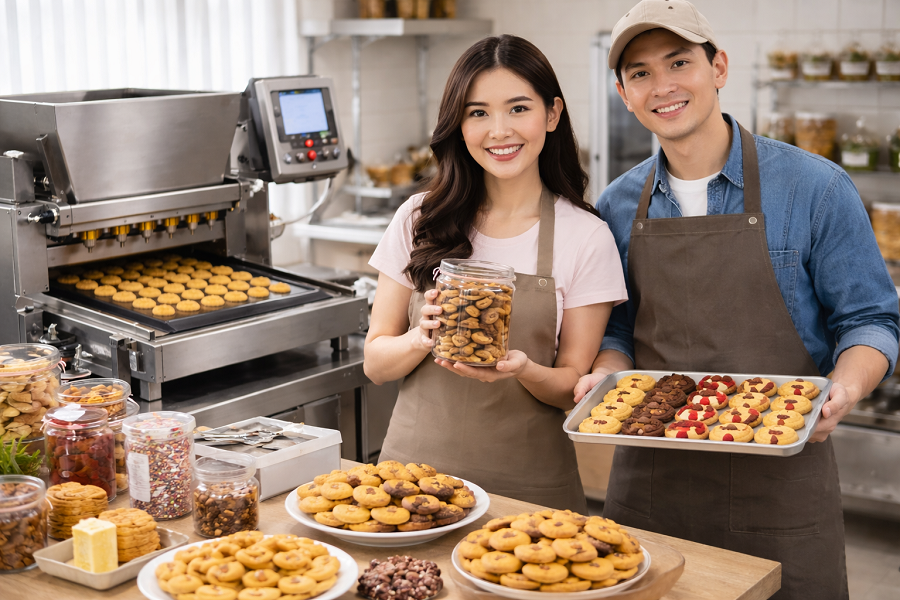

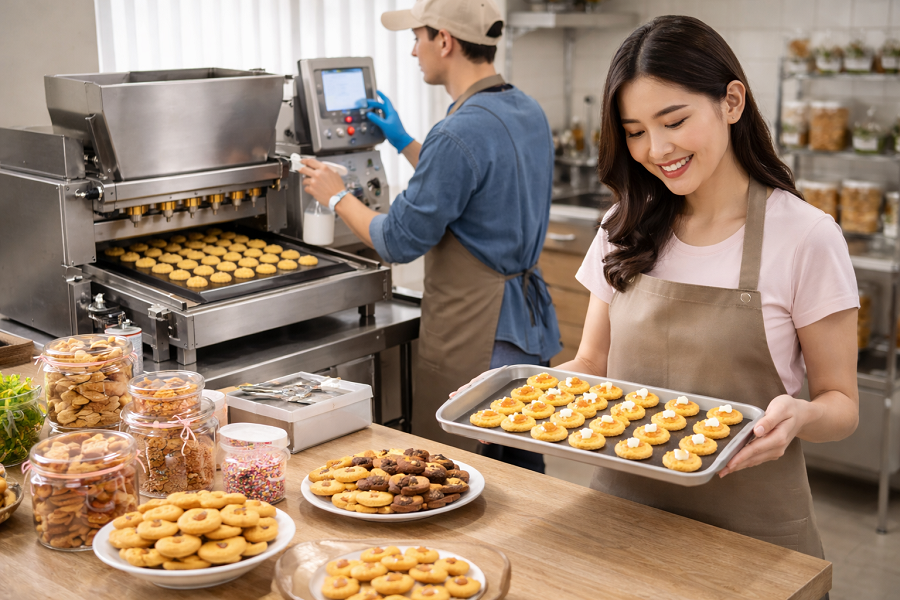
Starting a home-based food business, especially in the cookie and dry pastry segment, is a smart move in today’s market. Consumption trends for snacks and traditional Indonesian cookies continue to rise, both for daily needs and special occasions such as Eid, Christmas, or wedding celebrations. However, many home-based entrepreneurs face challenges in increasing production capacity without compromising taste and product appearance.
One of the most effective solutions to overcome this challenge is by using modern cookie machines. Today’s cookie production machines are designed to help SMEs and small industries produce high-quality products with uniform shapes and significantly improved production efficiency.
This article discusses how you can optimize your home-based business by using various types of cookie machines such as Cookie Depositor Machines, Cookie Extruder Machines, Cream Injector Machines, Layer Cake Machines, and Mini Encruster Machines—all flagship products from ProFood Machines, a local food machinery manufacturer with global standards.
Why the Cookie Business Is Worth Taking Seriously
Cookies are more than just snacks—they are products with a wide market and stable demand. Demand typically increases significantly during major festive seasons such as Eid and Christmas. In addition, the initial capital required for a cookie business is relatively low, as the ingredients—such as flour, butter, and sugar—are easy to source.
Another major advantage is the long shelf life of cookies. They can be stored for months without losing their flavor, making them ideal for both online and offline sales. In fact, several local cookie businesses have already entered export markets thanks to modern packaging and competitive product quality.
To reach this level, production efficiency and consistency are essential—something that is difficult to achieve when relying solely on manual labor. This is where automatic cookie machines play a crucial role.
Advantages of Using Cookie Machines in Home Production
Using machines in production not only speeds up the process but also enhances the professionalism of your business. Here are some key benefits:
Significantly Increased Productivity
Machines can produce hundreds to thousands of cookies in a short time, allowing you to fulfill large orders without stress.
Consistent Shape and Size
Depositor and extruder systems ensure each cookie looks uniform, increasing visual appeal for customers.
Cost and Time Efficiency
In the long run, machines help reduce labor costs and accelerate production processes.
Improved Hygiene
Minimal hand contact with dough results in cleaner and safer products for consumers.
Ready for Business Expansion
With higher production capacity, you can expand into distributors and modern retail outlets.
Types of Cookie Machines from ProFood Machines and Their Functions
ProFood Machines offers a range of cookie machines suitable for home-based businesses and medium-scale industries. Below are some key options tailored to different production needs.
Cookie Depositor Machine
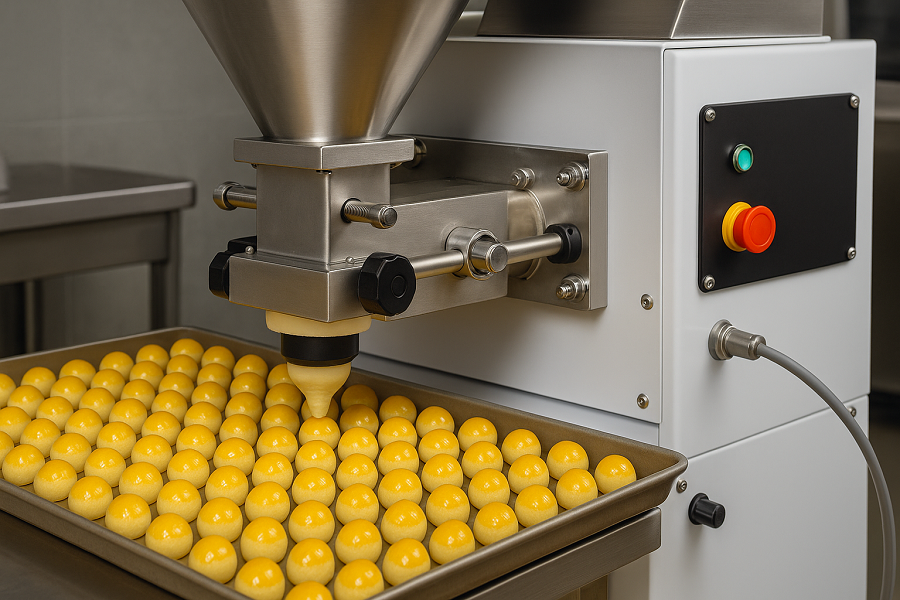
Ideal for producing various cookies such as pineapple cookies, butter cookies, spritz cookies, and cheese cookies. With automatic dough depositing and interchangeable nozzles, this machine ensures uniform size and a professional appearance. It is easy to operate, even for beginners.
Cookie Extruder Machine
Perfect for denser dough types such as oatmeal cookies or chocolate chip cookies. Its design allows thick dough to be extruded evenly, resulting in consistent and attractive shapes.
Cream Injector Machine
For filled cookies such as pineapple-filled cookies, jam-filled pies, or cream-filled cookies, this machine provides precise filling at a much faster speed than manual methods.
Layer Cake Machine
Designed for layered cakes such as lapis Surabaya, roll cakes, or cream-layered sponge cakes. The machine distributes batter evenly, ensuring neat layers with consistent thickness for professional results.
Mini Encruster Machine
For product variations like filled mochi, mung bean balls, or chocolate-filled cookies, the Mini Encruster Machine is a versatile solution. It automatically forms filled products in mini sizes, making it ideal for home businesses.
How to Optimize the Use of Cookie Machines
To ensure your machine investment delivers maximum results, apply the following strategic steps:
Choose Machines Based on Core Needs
If your main focus is cookies, start with a Cookie Depositor Machine before expanding to other machine types.
Start Gradually
You don’t need to purchase all machines at once. Begin with one core machine and add more as market demand grows.
Utilize Digital Marketing Strategies
Showcase your modern production process on social media to build customer trust. Short videos featuring machine operation can be highly engaging.
Pay Attention to Hygiene and Packaging
Machines help maintain hygiene, while elegant packaging enhances product value.
Build a Strong Brand Identity
Consistency in taste and appearance is key to building a solid reputation. Modern machines help ensure quality remains stable.
Success Stories from Home-Based Entrepreneurs
Many SMEs in Indonesia have proven the benefits of using modern cookie machines. One ProFood Machines customer in Surabaya increased daily production capacity from 10 kg of dough to 50 kg after using a Cookie Depositor Machine. With higher productivity, the business can now serve resellers and souvenir shops without hiring additional staff.
Machine Investment Is an Investment in the Future
Optimizing a home-based business with cookie machines is not just about efficiency—it’s about increasing competitiveness and professionalism. With technologies such as Cookie Depositor Machines, Cookie Extruder Machines, Cream Injector Machines, Layer Cake Machines, and Mini Encruster Machines, production becomes faster, more hygienic, and more consistent without sacrificing homemade flavor.
Proudly Supporting Local Products: ProFood Machines
For those looking to increase production capacity, ProFood Machines is ready to be your trusted partner.
The company designs and assembles all its products in Indonesia, supporting the use of locally made products. ProFood Machines believes that Indonesia’s local manufacturing industry can meet global standards through innovation and high-quality engineering.
With professional after-sales service and readily available spare parts, ProFood Machines is committed to helping you build a successful and sustainable home-based cookie business.